The Nose Notice Threshold® (NNT)
Why Anxiety Makes You Feel Everything. And once you feel them, it is hard to un-feel them.
3/10/202610 min read
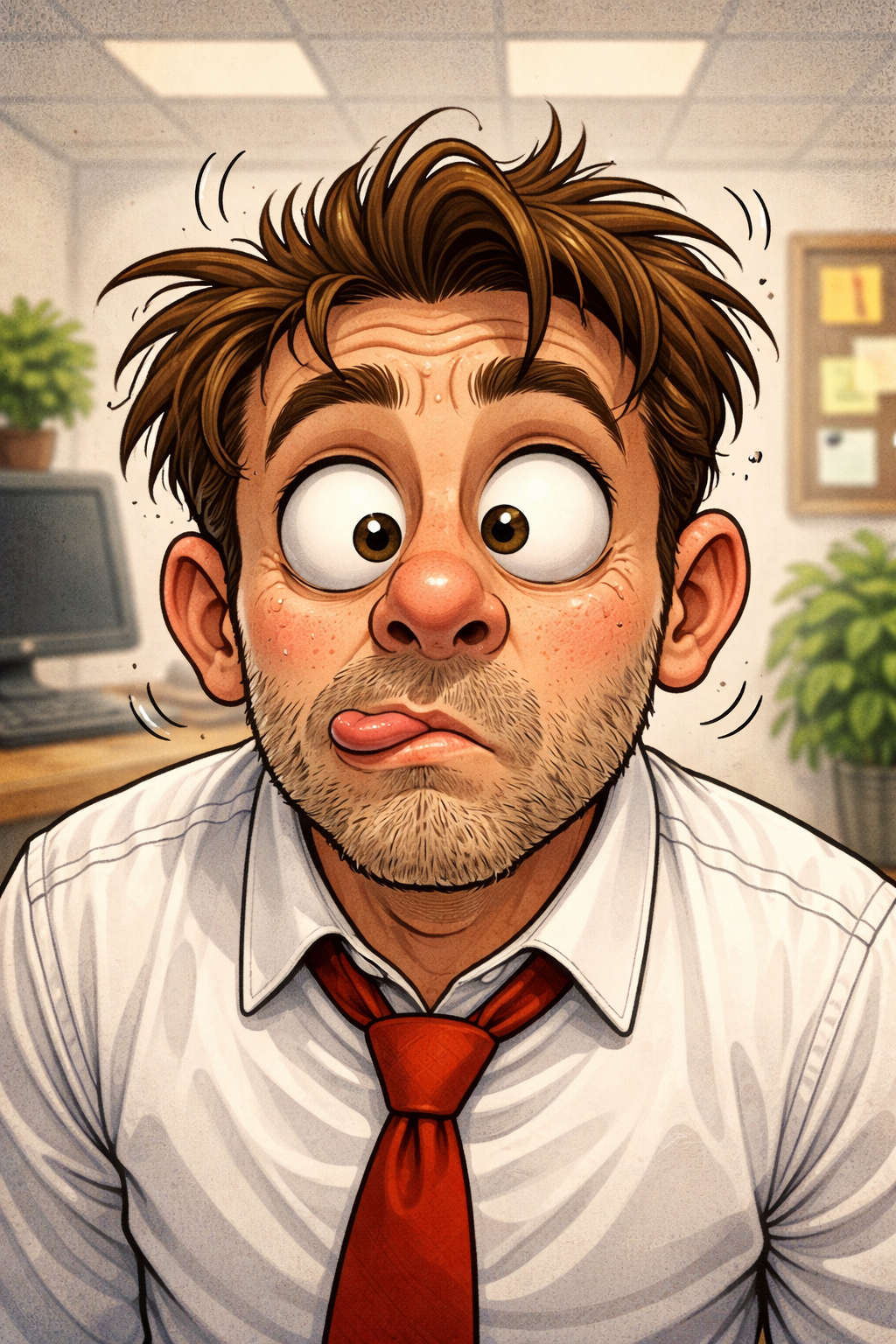
Let me introduce you to a concept I have named the Nose Notice Threshold — or NNT® for those who prefer their anxiety served with an acronym.
Now, before you ask: yes, there are existing medical and psychological terms that describe sensory filtering and perceptual thresholds. Terms like sensory gating, neural habituation, and cortical inhibition all circle around similar territory. I am aware of them. I read about them. I found them, with great respect, somewhat unsatisfying. They don't quite capture the lived experience of suddenly noticing something that was apparently always there and then being unable to stop noticing it. So, I made my own term. This is, after all, my blog.
The NNT is my attempt to explain something I kept noticing, not just in myself but in everyone I spoke to with similar symptoms. Why do some people become intensely aware of static in their vision, a persistent ringing in their ears, or every single heartbeat, while others seem to float through life blissfully unaware of any of it?
I want to be clear upfront: conditions like Visual Snow Syndrome and tinnitus have their own independent causes and mechanisms, which I have covered in separate posts. The NNT is not an attempt to reduce those conditions to a single explanation. What I am suggesting is something more specific — that anxiety and stress can significantly affect how intensely these things are noticed, and that for some people, a lowered threshold may be what brings a previously background experience into sharp and unwelcome focus.
In short: it's not that anxious people are imagining things. It's that their brain has stopped deciding those things aren't worth reporting.
The Nose You Can't See
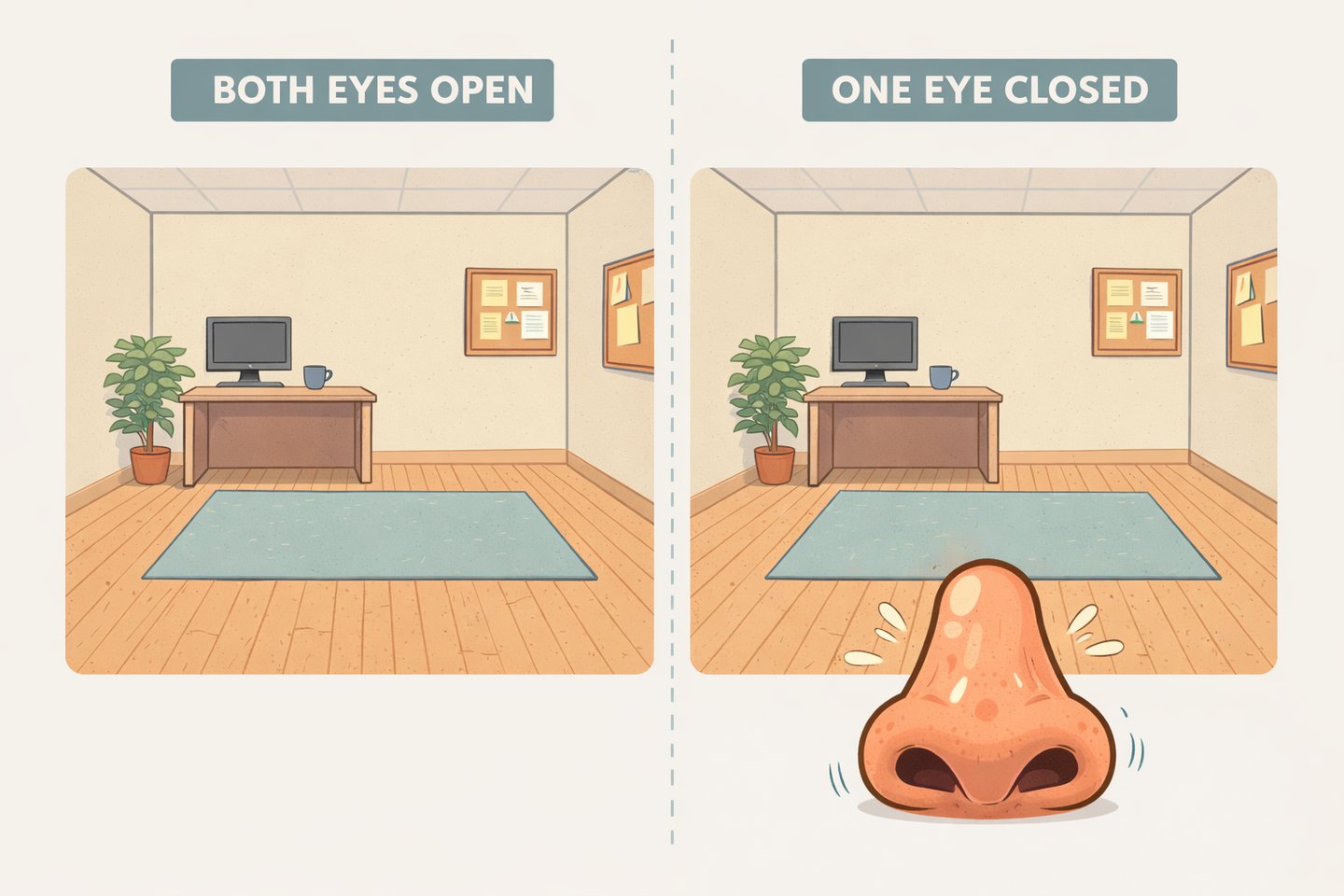
Before we go any further, I need you to do something. Don't skip this. It will take four seconds, and it will make everything that follows make considerably more sense.
Look straight ahead. Right now, as you're reading this. Can you see your nose?
No?
Are you sure? Because it is literally right there. It has always been right there. It is, in fact, one of the most consistently present objects in your entire visual field, closer than your phone, closer than this screen, closer than anything you will look at today. Your nose has been faithfully showing up to work every single day of your life, and you have been ghosting it like an ex.
Now close one eye.
There it is.
You didn't move. Your nose didn't move. No new information arrived. Your brain simply stopped bothering to edit it out for a moment, and suddenly an object that has been in your face, literally in your face, for your entire existence became visible.
This is the Nose Notice Threshold. Your brain is not a passive receiver of information; it is an aggressive editor. It constantly decides what makes the cut and what gets quietly filed under "not our problem". The nose doesn't make the cut. Neither does the hum of the fridge, the feeling of your clothes against your skin, the sound of your own breathing, or the faint visual static that sits at the edge of everyone's vision.
Most of the time, for most people, the threshold is set high enough to filter out the background noise of simply existing in a body. All of it quietly filed away under "probably fine, nothing to report".
But not always. And not for everyone.
We Are, Technically Speaking, Mostly Liquid
Let's take a step back for a moment. We are approximately 60% water. Which means we are essentially a slightly optimistic bag of liquid walking around convinced it has everything under control. The point is: we are soft, wet, complicated creatures, and feeling strange sensations from time to time is not a malfunction. It is Tuesday.
Now think of your brain as a medieval king. On a good day, the kingdom runs itself. The crops are fine, the borders are quiet, and the king can focus on important matters — a lavish feast, a goblet of wine, perhaps aggressively flirting with someone in the courtyard. He doesn't need a report from every village. He trusts his system.
But now imagine that king starts demanding daily updates from every single corner of the kingdom. Messengers arrive from every city. Envoys queue outside the throne room representing every minor complaint from every village. A farmer's goat went missing in the north. Someone's well is slightly murky in the south. The king is now buried in information, exhausted, overwhelmed, and completely unable to tell the difference between a real crisis and a mildly inconvenient goat situation. He is perhaps lying awake at night thinking about the goat.
This is your brain on a lowered Nose Notice Threshold. Not broken. Just catastrophically overstaffed.
What Anxiety Does to the Threshold
When you are under stress or experiencing anxiety, your nervous system shifts into a state of heightened alert. As we explored in the anxiety post, your amygdala is scanning for threats, your cortisol is elevated, and your entire system is tuned to notice things it might otherwise ignore.
This is useful if you're on the African savannah. It is considerably less useful if you're sitting at a desk.
Because here's what happens: the threshold drops. Your brain, now operating in threat-detection mode, starts reporting signals it would normally suppress. The filter gets turned down. And suddenly you are aware of things that were always there but never made it through before.
This isn't anxiety making things up. This is anxiety making you notice things that were already real.
What Gets Through When the Filter Drops
The symptoms that surface when the Nose Notice Threshold drops are remarkably consistent across anxious people. In some cases, anxiety may be the primary trigger. In others, the underlying condition exists independently, and anxiety simply turns up the volume, making symptoms more noticeable or harder to ignore. Either way, the pattern is striking.
Nothing in this section is a substitute for proper medical evaluation. If you are experiencing any of these symptoms and have not had them checked out, please do. The NNT framework is most relevant once serious causes have been ruled out, not as a reason to skip that step.
Visual Snow – That persistent static in your vision, the grain that looks like a detuned television. For some people this has independent causes, as we explored in the VSS post. But for many, anxiety appears to play a significant role in how intensely it is noticed. Once the threshold drops and you become aware of it, your brain flags it as potentially important — and now you can't unflag it. The filter struggles to go back.
Tinnitus – The ringing, hissing, or humming in your ears. I have had this symptom for years. Silence, it turns out, is not actually silent; there is always some level of neural noise in the auditory system. For some people tinnitus has specific physical causes. But for many, particularly during or after periods of stress, the threshold simply drops enough for that background noise to breach conscious awareness for the first time. And once heard, it is very hard to unhear.
Heart Palpitations – Your heart has been beating your entire life without you noticing most of it. When the threshold drops, you start noticing every beat, every slight irregularity, every moment it seems to skip or thud or race. The heart hasn't changed. Your awareness of it has.
What makes this particularly interesting is that anxiety doesn't just change your awareness of your heartbeat; it can actually change the heartbeat itself. The vagus nerve, which regulates your heart rate, is part of the same autonomic nervous system that anxiety throws into overdrive. When that system is activated, you may genuinely feel your heart rate increase, not just notice it more. The same nerve also governs your digestive system, which is why anxiety so reliably produces nausea, acid reflux, a burning stomach, and other digestive complaints that are less glamorous but entirely predictable. The body is all one system, and anxiety is not subtle about reminding you of that.
If you have an existing condition such as mitral valve prolapse, this heightened state can make symptoms more pronounced, which is another reason to get checked out first before considering what the NNT might explain.
Skin Sensations and Tingles – Your skin is constantly receiving input: temperature, pressure, the feeling of clothing, air movement. Normally almost none of this reaches conscious awareness. Under heightened anxiety, random tingling, crawling sensations, or patches of hypersensitivity suddenly appear. Not imagined. Just noticed. (A separate but related phenomenon: when someone mentions insects, people often feel a crawling sensation on their skin immediately. That is a different mechanism, suggestion rather than threshold, but it shows how easily the brain can be prompted to manufacture sensation from nothing.)
Speech – This one is less talked about but remarkably common, and I have felt it on a personal level, which I will cover in detail in another post. When you start paying close attention to how you speak, really attending to the mechanics of forming words, it becomes harder, not easier. Your mouth feels strange. You stumble over syllables you have said a thousand times. Words feel unfamiliar. This is what happens when the brain's automatic processes get interrupted by conscious monitoring. The threshold has dropped so far that you are now noticing the machinery of speech itself, and noticing it makes it feel broken.
Balance – Walk across a room without thinking about it and you do it effortlessly. Now think about every step: the shift of weight, the placement of each foot, the micro-adjustments your body is constantly making. Suddenly you feel unsteady. Jelly legs. A vague dizziness that has no physical cause. Your balance system is working perfectly. Your brain has just started noticing it, which paradoxically makes it feel like it isn't. I have experienced this myself and will cover it in more detail in another post.
The Cruel Irony
Here is what makes the Nose Notice Threshold so frustrating: noticing something makes you notice it more.
The moment you become aware of the static in your vision, you look for it. The moment you hear the ringing; you listen for it. The moment you feel your heartbeat, you monitor it. And every time you find it, which you will because it's always there, your brain registers it as confirmation that something is worth paying attention to.
Anxiety lowers the threshold. A lowered threshold reveals symptoms. The symptoms produce more anxiety. The anxiety lowers the threshold further. A perfect vicious cycle.
This is not a character flaw. This is a feedback loop. And feedback loops, unlike character flaws, can be interrupted.
What This Means in Practice
Understanding the NNT doesn't make the symptoms disappear immediately. But it does change what they mean.
The static in your vision is not your eyes failing. The ringing is not damage. The palpitations are not your heart giving up. The tingling is not neurological deterioration. The stumbling speech is not the beginning of something serious. The jelly legs are not a balance disorder.
They are signals that were always present, now making it through a filter that anxiety has turned down too low.
The filter can be turned back up. It happens gradually, as the nervous system calms, as the threat-detection system stands down, as anxiety loses its grip. People recover from all of these symptoms regularly — not by fixing something broken, but by raising the threshold back to where it was.
Your brain is not reporting too much because it is malfunctioning.
It is reporting too much because it is trying, very hard, to keep you safe.
It just needs reminding that you already are.
What Might Help
First, the advice you will not get here: just stop thinking about it.
That is roughly as useful as someone telling you not to think of a pink elephant. You know what happens next; you will immediately think about the pink elephant. Telling an anxious brain to simply stop noticing things is like telling the medieval king to ignore all his messengers. The messengers are already in the throne room. They have travelled a long way. They are not leaving quietly.
The more useful starting point is this: the elephant is fine. Let it be there. The goal is not to force the symptoms out of your awareness — it is to change what your brain does with them when they arrive.
The single most effective tool for this is labelling. When the symptoms surface and your brain starts firing its familiar questions, what if this is serious, what if it doesn't stop, what if the doctors missed something, recognise those thoughts for what they are. Not facts. Not warnings. Not evidence of anything except an anxious nervous system doing its job too enthusiastically. Say it out loud if you need to: “that is my anxiety talking”. It sounds almost insultingly simple. It works anyway, because it interrupts the loop at the exact point where it gains momentum. You can make it funnier if that helps: "oh, it's my old friend the anxiety spiral, right on schedule". Whatever creates a little distance between the thought and you is enough.
The second thing that helps is noticing the gaps, and this is different from monitoring your symptoms, so stay with me for a moment. When you are absorbed in something you enjoy, when you are exercising, when you are laughing at something, when you are genuinely present in a conversation, the static quiets, the ringing recedes, the heartbeat stops announcing itself. These moments are not lucky breaks. They are data.
But here is the crucial distinction: you are not looking for the symptoms to check whether they are still there. You are noticing the moments when you forgot to look. That is the opposite direction entirely. Checking under the bed every night reinforces the idea that something might be under the bed. Realising you slept through the night without once thinking about something might be under the bed is evidence that the monster was never really the problem; the checking was…
If something were genuinely wrong, it would not take a holiday when you went for a walk or got lost in a good film. The fact that it does is your nervous system telling you, in the only language it has, that the threshold is capable of rising again.
Breathing exercises and calming activities help too, not because they distract you, but because they give your nervous system a genuine signal that the threat has passed and it is safe to stand down.
It rose before. It will rise again.
Your ancient bodyguard is still on duty — scanning, reporting, doing his exhausting best. He doesn't need to be fired. He needs a quieter kingdom, a slower morning, and considerably fewer messengers.
Give him that, and he'll stand down.
Image credits: This is Fine" panel © KC Green, Gunshow webcomic (2013). Hamster on wheel gif sourced via Giphy; original creator unknown. All other illustrations created by the author using AI image generation tools.


your brain, catastrophically overstaffed
been here your whole life. you're welcome.


The anxiety feeds the vigilance. The vigilance feeds the anxiety.
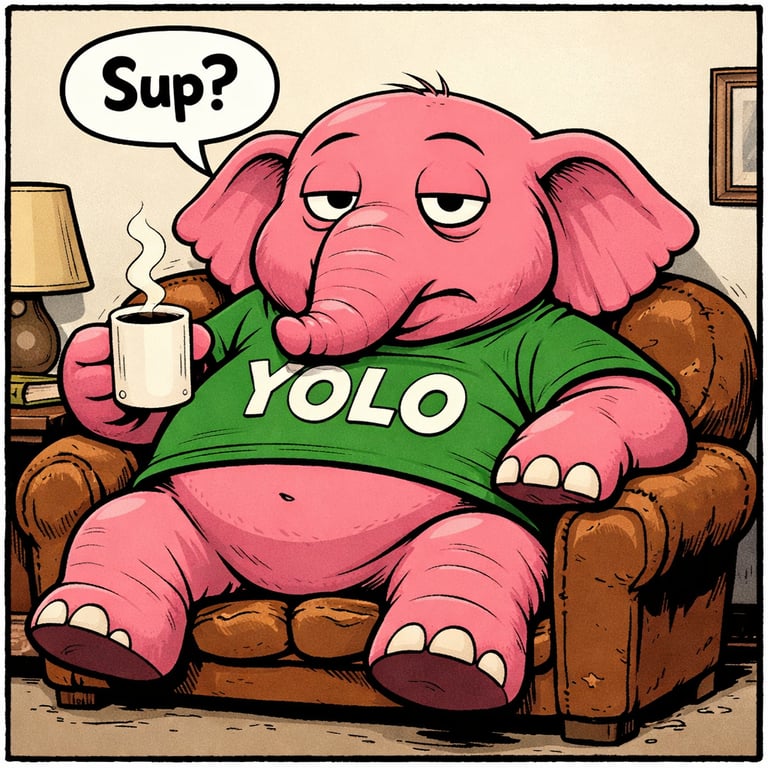
uninvited. unbothered. staying.
Stay
Join the MyWeirdSymptoms community to stay in touch!
Subscribe to My newsletter
© 2025-2026. All rights reserved.
Disclaimer
The content on My Weird Symptoms is for informational and entertainment purposes only. Nothing on this site is intended to be, or should be taken as, medical advice, diagnosis, or treatment. All opinions expressed here are the author's own and are based on personal experiences, research, and humour — not professional medical training.
Always seek the guidance of a qualified healthcare professional with any questions you may have regarding your health or a medical condition. Never disregard professional medical advice or delay seeking it because of something you've read here. If you think you may be experiencing a medical emergency, call your doctor or emergency services immediately.
Copyright & Fair Use
My Weird Symptoms occasionally uses images, graphics, or short clips from third-party media (such as TV shows, movies, and books) for purposes of commentary, criticism, humour, education, or parody. These materials remain the property of their respective copyright holders. We make no claim of ownership and do not intend to infringe on any copyrights.
Such use is intended to fall under fair use (17 U.S.C. § 107) as commentary, criticism, or parody. We use only small portions necessary to illustrate our commentary and always provide proper attribution where possible. If you are a copyright holder and believe any content should be removed, please contact us, and we will address it promptly.
Accuracy & Liability
While we strive for accuracy, information on this site may become outdated or contain errors. We make no guarantees about the completeness, reliability, or accuracy of information presented. Any action you take based on information from this site is strictly at your own risk.